
Hawaiian Pidgin—more accurately known as Hawaiian Creole English (HCE)—is a fully developed creole language spoken by many residents of Hawaii. It originated on sugar plantations in the late 1800s as a contact language among immigrant laborers from China, Japan, the Philippines, Portugal, and other countries. Over time, it developed into a stable, rule-governed language used across generations.
Educators and speech-language pathologists must be aware of Hawaiian Pidgin’s speech and language development and its distinct grammatical and phonological features to avoid misidentifying differences as speech or language disorders. Understanding this dialect is essential for equitable assessment, meaningful instruction, and the celebration of Hawaii’s cultural and linguistic diversity.
This article outlines the unique characteristics of Hawaiian Pidgin in comparison to Standardized American English (SAE), including grammar, phonology, vocabulary, and classroom considerations.
Overview of the Hawaiian Pidgin Dialect
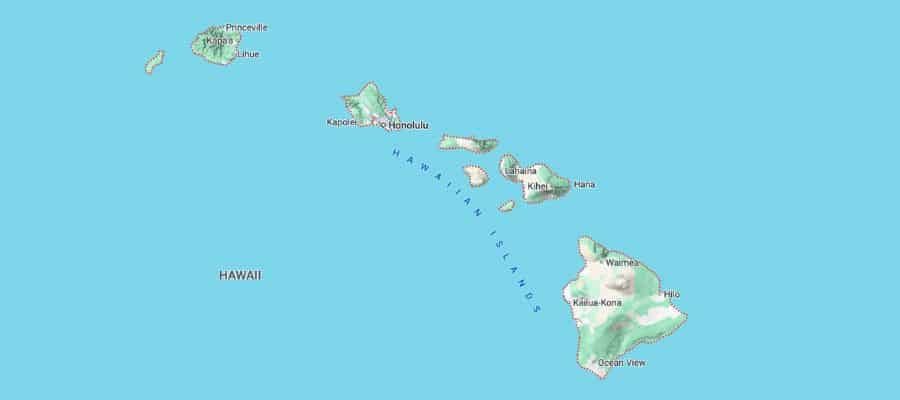
- Geographic Reach: Statewide in Hawai‘i, particularly on O‘ahu and the Big Island
- Linguistic Classification: Creole language that developed from a pidginized form of English
- Cultural Significance: Symbol of local identity and pride
- Speaker Community: Includes native speakers (first language) and fluent second-language users
- Recognition: While still stigmatized in some contexts, Pidgin is a legitimate language, not "broken English"
Phonological Features of Hawaiian Pidgin Speech
Phonological features of Hawaiian Pidgin reflect influence from multiple languages and often differ from SAE in rhythm, intonation, and pronunciation.
| Phonological Feature | Hawaiian Pidgin Example | SAE Equivalent | Notes |
|---|---|---|---|
| TH-stopping | “this” → /dis/, “thing” → /ting/ | /ðɪs/, /θɪŋ/ | /θ/ and /ð/ replaced by /t/ or /d/ |
| Glottal stops | “bottle” → /baʔo/ | /ˈbɑtəl/ | Glottal stop replaces /t/ or final sounds |
| Syllable timing | Equal stress on all syllables | Stress-timed rhythm | Influenced by Japanese, Hawaiian |
| Final consonant deletion | “best” → /bes/ | /bɛst/ | Often omits final clusters |
| Non-rhoticity (sometimes) | “car” → /ka/ | /kɑr/ | Depends on region and speaker |
| Vowel changes | “pin” and “pen” both → /pɛn/ | /pɪn/, /pɛn/ | Vowel mergers are common |
Grammatical Differences Between Hawaiian Pidgin and SAE
Hawaiian Pidgin grammar is simplified in some respects compared to SAE, but follows consistent and predictable rules.
| Grammatical Feature | Hawaiian Pidgin Example | SAE Equivalent | Notes |
|---|---|---|---|
| Zero copula | “She pretty.” | “She is pretty.” | Verb “to be” often omitted |
| No past tense inflection | “Yesterday he go school.” | “He went to school yesterday.” | Context supplies tense |
| Unmarked plurals | “Plenty dog at park.” | “There are many dogs at the park.” | Plural marked by quantifier |
| Different pronouns | “We go” (inclusive), “us guys” | “We are going” | Pronouns may reflect pidgin structure |
| Use of “stay” for location | “He stay home.” | “He is at home.” | “Stay” replaces “is” for location |
| No subject-verb agreement | “She go beach.” | “She goes to the beach.” | Verbs do not change with subject |
Unique Vocabulary in Hawaiian Pidgin Speech
Hawaiian Pidgin includes many lexical items borrowed from Hawaiian, Japanese, Portuguese, and other languages.
| Hawaiian Pidgin Term | Standard American English Equivalent |
|---|---|
| pau | finished, done |
| da kine | whatchamacallit / context-dependent placeholder |
| choke | a lot, many |
| grindz | food, meal |
| talk story | have a conversation |
| bumbai | later, eventually |
| hana hou | encore, again |
| mo' bettah | much better |
| auntie/uncle | adult (not necessarily a relative) |
| brok da mout | delicious |
Hawaiian Pidgin in Literacy and Classroom Communication
Students who speak Hawaiian Pidgin may:
- Write as they speak, which can differ in grammar and structure from SAE
- Struggle with spelling due to phonological variations
- Demonstrate strong oral storytelling and cultural references
- Be misjudged as having a language disorder when dialectal differences are not understood
Speech-language pathologists and educators should distinguish dialect from disorder and consider using contrastive analysis to help students learn code-switching skills. Culturally sustaining pedagogy acknowledges Pidgin as valid and supports the development of SAE without undermining home language identity.
Examples of Hawaiian Pidgin Speech and Language Development
To hear natural examples of Hawaiian Pidgin speech:
Additional Resources on Hawaiian Pidgin Speech and Language Development
- Pidgin: The Voice of Hawai‘i – Documentary film and educational resource
- University of Hawai‘i at Mānoa – Charlene Sato Center for Pidgin, Creole, and Dialect Studies
- PBS Hawai‘i Learning Resources on Hawaiian Pidgin
- Code-Switching Strategies in Hawaii Classrooms – Journal articles and teacher guides
Sources:
- Da Pidgin Coup. Pidgin: The Voice of Hawai‘i. PBS Hawai‘i, 2009.
- Langfocus. “What is Hawaiian Pidgin?” YouTube, 2019.
- PBS. “Pidgin: The Voice of Hawai‘i.” YouTube, 2018.
- Roberts, Sarah. “Pidgin and Education in Hawai‘i.” TESOL Quarterly, vol. 39, no. 1, 2005, pp. 63–82.
- Sakoda, Kent, and Jeff Siegel. “Hawai‘i Creole English.” Language in the USA, edited by Edward Finegan and John R. Rickford, Cambridge UP, 2004, pp. 305–317.
- Wikitongues. “Kale Speaking Hawaiian Pidgin.” YouTube, 2017.
English Dialects Compared to Standard American English
This is one of several essays that we put together on the many varieties of our shared language. Check these out: