
Afrikaans speech and language development represents the evolution from the West Germanic branch of the Indo-European language family, classified specifically under Germanic, West Germanic, Low Franconian, Dutch, and finally Afrikaans. The language developed from 17th-century Dutch through the contributions of European (Dutch, German, and French) colonists, indigenous Khoisan peoples, and African and Asian slaves in the Dutch Cape Colony, evolving as a creolized language with roots mainly in Dutch mixed with seafarer variants of Malay, Portuguese, Indonesian and indigenous languages. Afrikaans arose through gradual divergence from European Dutch dialects during the 18th century, though it was not officially declared a language separate from Dutch until 1983. Afrikaans also shows Malay influence due to early Cape Town settlement and exists in six different dialects: Kaaps, Boeraans, Eastern Cape, Northern Cape, Patagonian, and Namibian.
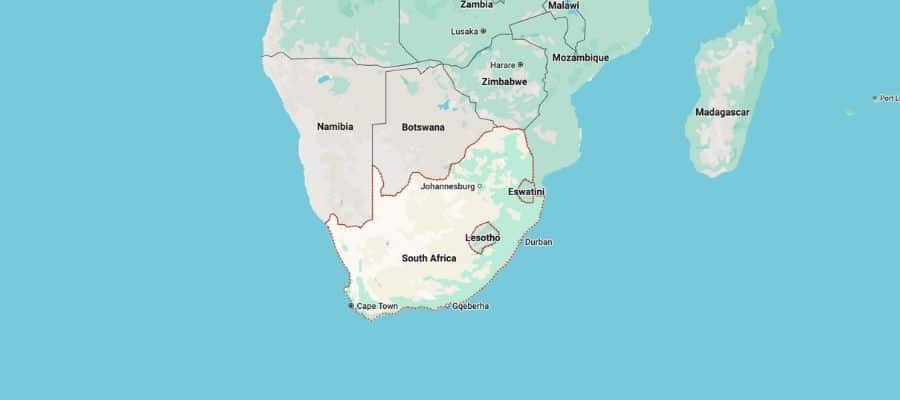
Afrikaans is spoken across multiple continents, serving as an official language of South Africa and a recognized national language of Namibia, with significant populations in Australia, New Zealand, Canada, the United Kingdom, Botswana, Pakistan, Argentina, Finland, and Mauritius. In South Africa, approximately 6,800,000 people speak Afrikaans, while in the United States, over 28,000 people speak the language, representing immigrant communities primarily from South Africa and Namibia. The language maintains a strong presence in Southern Africa, where it continues to play an important role in education, media, and daily communication despite the complex historical and political contexts surrounding its development during the colonial and apartheid periods. Due to its use by the apartheid government, Afrikaans is often seen as a language of oppression. Afrikaans differs from Standard Dutch primarily in its simplified sound system and the loss of case and gender distinctions, but still retaining its Germanic linguistic heritage and reflecting the multicultural influences that shaped its unique development.
Continue reading to learn how to accurately and sensitively work with people who speak the Afrikaans language.
Interesting Facts About Afrikaans Speech and Language Development
- There are some English words borrowed from Afrikaans. A few examples include "trek," "aardvark," and "wildebeest."
- One of its first written forms used the Arabic alphabet. Before it was standardized with the Latin alphabet, Afrikaans was recorded by the Cape Muslim community and used the Arabic script. This is known as "Arabic Afrikaans" and was used to write religious and educational texts.
- Afrikaans was only recognized as a distinct language in 1925. This makes it one of the youngest languages, but it boasts a high amount of speakers.
Afrikaans Speech and Language Development
Afrikaans Consonants in Comparison to English
| Afrikaans Consonants Not Shared with English | /χ/ /ɦ/ /ʀ̥/ |
| Consonants Shared With English | /m/ /n/ /ŋ/ /p/ /b/ /t/ /d/ /k/ /g/ /tʃ/ /f/ /v/ /s/ /z/ /ʃ/ /l/ /w/ /j/ |
| English Consonants Not Shared with Afrikaans | /dʒ/ /h/ /ð/ /θ/ /ɹ/ |
Afrikaans Vowels in Comparison to English
| Afrikaans Vowels Not Shared with English | Long vowels: /eː/ /ɛː/ /oː/ /øː/ /œː/ /y/ /ø/ /œ/ /əi/ /œy/ /ɪə/ /uə/ |
| Vowels Shared With English | /a/ /i/ /ɛ/ /ə/ /o/ /u/ /æ/ |
| English Vowels Not Shared with Afrikaans | /ɚ/ /ɔ/ /ʌ/ /ʊ/ /e/ /I/ |
Notes on Afrikaans Phonology
- Afrikaans lacks many of the fricatives and affricates present in English such as /ʃ/, /ʒ/, /tʃ/, /dʒ/, and the interdental fricatives /θ/ and /ð/. Instead, it features uvular and glottal fricatives like /x/ and /ɦ/, and a trilled or tapped /r/.
- Afrikaans features a richer inventory of front rounded vowels such as /y/, /ø/, and diphthongs uncommon in English. It lacks central vowels like /ɚ/ and /ʌ/, and has fewer reduced vowels. Long vowels and diphthongs are contrastive in Afrikaans.
The Use of Phonotactic Constraints in Afrikaans Speakers
1. Ambisyllabicity Rejection
Afrikaans does not allow intervocalic consonants to belong simultaneously to two syllables (i.e., ambisyllabic consonants are rejected) (taalportaal.org).
2. Maximal Onset Cluster Shape (C₁C₂C₃)
Afrikaans permits up to three consonants in the syllable onset (C₁C₂C₃).
- C₁ must be /s/
- C₂ must be a voiceless plosive (/p/, /t/, or /k/)
- C₃ must be a liquid (/r/ or /l/) (taalportaal.org)
3. Word‑Final Coda Consonant Clusters
Afrikaans allows up to three consonants in word-final coda clusters, and up to two consonants word-medially. Notably, virtually all consonants (except /h/) may occur in coda position (taalportaal.org).
4. Diachronic Cluster Simplification
Certain historically complex consonant clusters (e.g. /rm/ in arm, /xt/ in nacht) were simplified through vowel epenthesis (arm → /rəm/) or deletion (nacht → /nax/), showing diachronic phonotactic repair (SciELO, Semantic Scholar).
5. Cluster Stability Influenced by Articulatory Difference
Clusters are more likely to persist if their constituent consonants differ significantly in manner of articulation. By contrast, large differences in place of articulation can inhibit cluster transmission; voicing differences show more complex effects (LSA Technology Services, SciELO).
Afrikaans Phonotactic Constraints — Summary Table
| Phonotactic Constraints |
|---|
| No ambisyllabicity: intervocalic consonants are strictly assigned to one syllable. |
| Onset structure restricted to C₁ (/s/) + C₂ (voiceless plosive) + C₃ (liquid), max three segments. |
| Codas: up to 2 consonants internally, up to 3 word-final; all consonants except /h/ permitted in coda. |
| Historic cluster simplification through vowel insertion or consonant deletion (e.g., /rm/ → /rəm/, /xt/ → /x/). |
| Stability of consonant clusters correlates with articulatory difference (manner > place; voicing variable). |
Afrikaans Speech Developmental Norms
| Age of Acquisition | Sounds |
|---|---|
| By 2 years (24 months) | All vowels (monophthongs & diphthongs); plosives: /p/ /t/ /k/ /b/ /d/ /g/; approximant /j/ |
| By 3 years (36 months) | Affricates /tʃ/ /dʒ/; nasals /m/ /n/ /ɲ/ /ŋ/; lateral /l/ |
| By 4 years (48 months) | All fricatives: /ɦ/ /f/ /v/ /s/ /ʃ/ /z/ /x/ |
| By 5 years (60 months) | Trill /r/; all consonant clusters (C clusters fully acquired) |
Summary:
- Vowels: All monophthongs and diphthongs by age 2.
- Consonants:
- Early (by 2): Plosives and /j/.
- Mid (by 3): Affricates, nasals, lateral.
- Later (by 4): Fricatives.
- Latest (by 5): Trill /r/ and clusters.
While further studies exist on phonological patterns and phonological processes (e.g., du Plessis et al. 2024), these focus on elimination of patterns like gliding or cluster reduction—not on initial acquisition ages—so they don't directly inform the requested chart (LitNet).
Language Specific Differences Between English and Afrikaans
Afrikaans and English share some grammatical features such as a predominately Subject‑Verb‑Object (SVO) word order and similar noun‑adjective positioning. However, Afrikaans uses a distinctive double negation pattern (“nie … nie”) unlike English. Plural formation in Afrikaans is relatively regular compared to English. The language lacks verb conjugation for person, and definite articles are not gendered (unlike English pronouns). These characteristics often make Afrikaans more predictable—and consequently somewhat easier—for learners.
| Language Features | Afrikaans | English |
|---|---|---|
| Sentence Word Order | SVO in main clauses; V2 word order (STOMPI rule); verb-final in subordinate clauses | SVO |
| Adjectives/Noun Modifiers | Adjectives precede nouns; agree in number (not gender) | Adjectives precede nouns; no agreement |
| Possessives | Possessives formed with ’s | |
| Possessive Pronouns | my/mine, your/yours, his, her/hers, etc. | |
| Verb Inflection | No person conjugation (single form across pronouns) | Verbs inflect (he runs vs I run) |
| Pronouns | Pronouns similar to English (ek, jy, hy, sy, ens.) | I, you, he, she, it, we, they |
| Pronoun Gender | No grammatical gender in nouns; pronouns reflect natural gender (hy, sy) | No grammatical gender in nouns; pronouns reflect natural gender |
| Subjects of Sentences | Subject present; verb in second position (main clauses) | Subject present; SVO order |
| Regular Past Tense | Formed with het + past participle; no simple past for most verbs | Many regular past forms (-ed) |
| Irregular Past Tense | Only ‘wees’, modals, ‘dink’ form preterite | Irregular past forms exist (went, saw, etc.) |
| Negatives | Double “nie … nie” pattern (Ek is nie moeg nie) | Single negation with “not” |
| Double Negatives | Required structure (“nie…nie”) | Generally non-standard or emphatic |
| Question Formation | Verb–subject inversion in yes/no questions (“Verstaan jy dit?”) | Verb–subject inversion (“Do you understand?”) |
| Definite Articles | “die” for all nouns (no gender distinction) | “the” for all nouns |
| Indefinite Articles | “‘n” used universally (“’n boek”) | “a”/“an” depending on phonology |
| Prepositions | Precede nouns similarly to English (op, in, met, ens.) | Precede nouns (on, in, with, etc.) |
| Present Progressive Verb Form | Afrikaans has no distinct progressive; context implies continuous action | Use “–ing” form with “be” (is running) |
| Modal Verbs | Modals like kan, moet, sal form past and perfect more regularly | Use modals (can, must, will, etc.) |
| Copula / “To Be” Verbs | “is” used consistently; no conjugation variations | “am/is/are” forms |
| Auxiliary Verbs | Used for tense (“het” for past), modals act as auxiliaries | Use do/has/had and modals as auxiliaries |
| Passive Voice | Passive formed with “word deur…” | Passive with “be + past participle” |
| Direct Object Pronouns | Pronouns like “hom” follow same position as English; no case changes | “him/her/it” following similar SVO order |
| Conjunctions | Use “en” (and), “maar” (but), “of” (or), “want” (because) | Use “and,” “but,” “or,” “because,” etc. |
| Plurals | Add “-e” or “-s”; relatively regular | Regular (“-s”), some irregular (“children”) |
Additional Germanic Languages
This is just one of seven Germanic languages we feature in the World Language Library. Click below to explore related languages that share roots with English, including Dutch, Norwegian, Afrikaans, and others.
Sources:
"15 Facts And History About The Afrikaans Language." Silver Bay Translations, 19 May 2020. Accessed 5 August 2025.
"A Brief History of Dutch in Africa." EuropeNow, 28 Feb. 2018.
"Afrikaans." Britannica, 20 July 1998.
"Afrikaans." Wikipedia, 2025.
“Afrikaans grammar.” Wikipedia, Wikimedia Foundation, 2025.
“Afrikaans Grammar Theory: Adjectives, Negation, etc.” afrikaansleer.com.
“Afrikaans Phonology.” Wikipedia, Wikimedia Foundation, 5 Aug. 2024, https://en.wikipedia.org/wiki/Afrikaans_phonology
Baumann, Andreas, and Daan Wissing. “Stabilising Determinants in the Transmission of Phonotactic Systems: Diachrony and Acquisition of Coda Clusters in Dutch and Afrikaans.” Linguistics, Centre for Text Technology, North-West University, 2018.
Donaldson, Bruce C. (12 May 2011). A Grammar of Afrikaans. Walter de Gruyter. p. 218.
ISBN 978-3-11-086315-4.
“Double negative.” Wikipedia, Wikimedia Foundation, 2025.
Giliomee, Hermann. "More than an Oppressor's Language: Reclaiming the Hidden History of Afrikaans." The Conversation, 7 Sept. 2024.
“Grammar Introduction.” afrikaans.us.
Ladefoged, Peter, and Keith Johnson. A Course in Phonetics. 7th ed., Cengage Learning, 2014.
Pringle, Le Roux, Geertsema & Graham (2022): Die verwerwing van Afrikaanse foneme deur kinders 24–72.
“Sentence Structure in Afrikaans Grammar.” afrikaansleer.com.
Taalportaal. “The Phonotactics of Afrikaans: Onset, Rhyme, and Coda Constraints.” Taalportaal.org.
The acquisition of Afrikaans phonemes in children aged 24-72 months. Repository (n.d.).
The Digital Language Portal. Taalportaal. (n.d.).
Wissing, Daan. "Afrikaans Phonology." The Cambridge Handbook of Phonology, edited by Paul de Lacy, Cambridge University Press, 2007.
Wissing, Daan. "The phonetics and phonology of Afrikaans." Afrikaanse Taalportaal, 2020. https://www.let.rug.nl/veel/
Wissing, Daan. “The Phonotactics of Afrikaans” (summary). Taalportaal.org.
Contributors:
A special thanks to Caitlin Terrazas with Our Lady of The Lake University for data compilation and research that went into this article!