
If you’re an SLP, you’ve probably had this conversation more than once:
A teacher says they’re worried about a student’s phonological awareness, and you start thinking about phonological processes and speech sound patterns. The teacher, meanwhile, is thinking about rhyming, blending, and decoding. Same student. Same concern. Different frameworks.
Phonological awareness lives at the intersection of speech, language, and literacy, yet it’s one of the most misunderstood terms across disciplines. When we get clear on what it is (and what it is not), collaboration improves, referrals make sense, and therapy aligns far more naturally with what’s happening in the classroom.
Phonological awareness is the ability to hear, identify, and manipulate the sound structures of spoken language, including words, syllables, onsets, rimes, and individual phonemes. These auditory skills are a strong predictor of later reading and spelling success.
Here's what we are going to tackle in this essay. It's written for school-based SLPs who want to:
- Clarify how phonological awareness fits within our scope
- Understand why reading teams raise concerns about it
- See where phonological awareness overlaps with phonological disorders
- Make sense of common classroom assessments
- Use everyday speech therapy activities to support literacy without adding a new curriculum
What Is Phonological Awareness?
Phonological awareness (PA) refers to a child’s ability to consciously think about and manipulate the sounds of language. It’s not about recognizing letters or reading words. It’s about understanding that the word bat has three distinct sounds: /b/ /a/ /t/ and that changing one sound changes the meaning.
Why Phonological Awareness Matters to SLPs
Phonological awareness (PA) acts as the bridge between speech and literacy. Students with strong PA can map spoken words to print more efficiently. Those with weak PA may decode words slowly or guess from context. Research spanning 30 years consistently shows that phonological awareness is one of the strongest predictors of early reading and spelling success, regardless of IQ or background (Hogan et al., 2005; National Reading Panel, 2000).
For SLPs, this matters because speech sound disorders (SSD) and phonological awareness deficits frequently overlap. A child who omits final consonants or struggles to blend may have both articulation issues and poor awareness of sound structures. Therapy that builds phonological awareness strengthens both speech and literacy outcomes.
SLP takeaway: If you improve how students think about sounds, you often improve how they produce sounds.
Phonological vs Phonemic Awareness vs Phonics
It's really clear why there can be confusion between the words phonological, phonemic awareness, and phonics. They look like synonyms! It's also clear why a teacher may not completely understand what a phonological disorder is because their world deals in phonemes as it relates to reading.
For SLPs, understanding the difference helps us explain the disorder to a teacher so that it is not misconstrued with the classroom reading agenda. Here's a chart describing the differences:
| Concept | What It Targets | Examples | Involves Print? |
| Phonological Awareness | Broad awareness of sound structures: words, syllables, onset-rime, and phonemes | Clap syllables in “banana,” identify rhymes, blend /s/ + /un/ | ❌ No |
| Phonemic Awareness | The most advanced level of PA — awareness of individual phonemes | Segment /c/-/a/-/t/; delete /s/ in “star” → “tar” | ❌ No |
| Phonics | The connection between sounds and written letters | Match /k/ to c/k; decode ship using sh | ✅ Yes |
The confusion happens because all three build on each other. Phonological awareness develops first (sound only), phonemic awareness hones in on individual sounds, and phonics maps those sounds to letters.
Tip for teachers and SLPs:
Think of the relationship like this:
🧠 Phonological awareness → 🎯 Phonemic awareness → 🏫 Phonics
The Phonological Awareness Continuum
Phonological awareness isn’t one skill, it’s a continuum that typically develops from awareness of larger sound units to smaller ones. Each level forms a foundation for the next.
| Level | Skill Focus | Student Example | Therapist Prompt |
| Rhyme | Recognize and produce rhymes | “Cat” rhymes with “hat.” | “Tell me a word that rhymes with sun.” |
| Alliteration | Notice same beginning sounds | “Mia made muffins.” | “What sound do these words start with?” |
| Word Awareness | Identify words in a sentence | “I like ice cream.” → 4 words | “Say the sentence and count the words.” |
| Syllable Awareness | Clap, blend, and segment syllables | “El-e-phant” has 3 parts | “Let’s clap the beats in straw-ber-ry.” |
| Onset-Rime | Blend/segment beginnings and endings | /s/ + /un/ = sun | “What word is /c/ + /ake/?” |
| Phoneme Awareness | Isolate, blend, segment individual sounds | /b/-/a/-/t/ = bat | “Say the first sound in dog.” |
| Phoneme Manipulation | Add, delete, or substitute phonemes | map → mop → top | “Change the /m/ in man to /p/.” |
Developmental Notes on Rhyme
I find the discussion of rhyming really interesting. In speech therapy, I never really focus on rhyming or if it comes up, it's usually by accident or for something fun. But then I talk to teachers about how a student is doing or what their concerns are and the student's ability to rhyme is mentioned from time to time. It wasn't until I read this article on Reading Rockets that I finally understood: Teachers are using rhyming ability is a predictor of later reading development. While teaching rhyming doesn't correlate with better reading, it is still part of their activities and some measures.
- Preschoolers typically master rhyme and syllable skills.
- Kindergarteners move into onset-rime and simple phoneme awareness.
- First graders refine segmentation and blending.
- Second graders and beyond tackle manipulation tasks (delete, substitute, reverse).
People in the Rhyming Camp would say:
Jumping straight to phoneme manipulation before a student can clap syllables is like teaching algebra before addition. Each step requires cognitive precision built from the previous level. I think this is in alignment with how we build from the sound to the syllable to the word in our own therapy sessions.
Evidence-Based Phonemic Awareness Instruction: What Works and Why
Phonological awareness is about speech sounds, and SLPs are the sound experts. You already analyze phonemes, teach discrimination, and cue articulator movements. Embedding PA work within your therapy builds literacy without needing a separate curriculum. For buy-in purposes, here is what the experts have found:
Research Highlights on the Use of Phonological Awareness Activities
- National Reading Panel (2000) and later IES/REL (2019) reviews confirm that explicit phonological awareness instruction, especially blending and segmenting, significantly improves decoding and spelling.
- Brief, frequent practice (10–15 minutes daily) yields stronger results than infrequent long sessions.
- Instruction is most powerful when it includes multiple levels of PA and connects directly to reading once letters are introduced.
- Students with SSDs or language impairments benefit from integrated approaches that target both articulation and awareness.
Easy Intervention Principles for SLPs
- Start oral. Keep print out until mastery at the sound level.
- Model and scaffold. Use clear modeling (“Watch my mouth: /s/…/un/”) before independent responses.
- Keep it brisk and interactive. The goal is 30–40 student responses in a 10-minute block.
- Link to phonics once blending and segmenting are automatic.
Phonological Awareness Assessment and Progress Monitoring
Assessing phonological awareness is something that teachers do frequently. In some schools it is pretty lengthy and in some schools it is more akin to a frequent screener. I have included some common assessments here and what their processes look like. Until I saw this, I had a really wrong idea about what they were doing and what they were testing. In my SLP brain, this translated incorrectly into Phonological Processes so the teacher and I were having two completely different conversations. It probably looked like this:
Teacher: I am really concerned about Juan's phonological awareness because it is holding up his reading. I can't get him to improve based on the Beginning Of Year screener.
Me-the-SLP: Juan doesn't have a phonological disorder. We work on articulation sounds and expressive language.
Teacher: !?! Here are his CTOPP scores. He got 10% correct on the 1st and the 15th of this month.
Me-the-SLP: Oh. Let's start again. What are you testing?...
Here are some common ways data on phonological awareness is collected and what it looks like.
Phonological Awareness Screening Tools
- Phonological Awareness Screening Test (PAST) – efficient and free for educators.
- Comprehensive Test of Phonological Processing (CTOPP-2) – standardized, but time-intensive.
- Heggerty or 95% Group Checklists – informal, aligned with tiered literacy systems.
| Purpose | Example Tasks | Data Points | Frequency |
| Screening | Rhyme ID, syllable count, blend/segment | 10–15 items | BOY/MOY/EOY |
| Diagnostic | Onset-rime split, CVC segmentation | Accuracy + latency | Start of therapy |
| Progress | 10-item mixed probe | % correct | Biweekly |
| Mastery | Manipulation/deletion tasks | 90% across sessions | When goals met |
Bilingual and Multilingual Considerations for Phonological Awareness Assessment
A quick sidebar on bilingualism. As you can imagine, prosodic differences and phonological differences across languages can really mess up the data of a standardized assessment designed on a monolingual population (a.k.a. ALL!). Phonological awareness can take longer to acquire because the child is learning the patterns of English just to speak before applying them to syllable-based reading. The good news is that phonological awareness skills transfer across languages, but the extent depends on sound systems and syllable patterns.
- Shared phonemes transfer most easily. If /m/, /p/, and /t/ exist in both languages, start there.
- Syllable structures vary. Spanish and Japanese favor CV syllables, so students may need extra work on final consonants or blends common in English.
- Rhyme awareness can be weaker in languages where rhyme isn’t culturally emphasized (e.g., tonal languages).
- Instruction language matters. Teach PA in the language of reading instruction but encourage practice in both languages.
Example: A bilingual Spanish-English student may easily clap syllables in camisa and banana but struggle to segment truck because of consonant clusters not found in Spanish.

Therapy Activities that Map to the Continuum
You don’t need fancy materials to teach phonological awareness or add it to your speech therapy. If a teacher is concerned about a student's reading, there are already so many activities that we do that can be viewed as a part of the continuum to develop phonological awareness. Here a some phonological awareness examples disguised as common speech therapy activities.
Examples by Level
| Level | Activity | Materials | Duration |
| Rhyme | Rhyme Detectives – students match picture cards that rhyme. | Picture cards | 3 min |
| Alliteration | Sound Safari – hunt around the room for items that start with /b/. | Classroom objects | 3 min |
| Syllables | Clap & Tap – clap each syllable, then tap it on the desk. | None | 2 min |
| Onset-Rime | Slide & Say – say onset and rime separately, then slide hands together. | None | 3 min |
| Phoneme Blending | Robot Talk – you speak like a robot; students “translate.” | None | 2 min |
| Phoneme Segmentation | Pop the Sounds – pop bubbles or counters as you say each sound. | Counters | 3 min |
| Manipulation | Switch-It – say cat, then switch /k/ → /h/ = hat. | Counters or blocks | 5 min |
Collaborating Within Reading Initiatives
SLPs can play a pivotal role in school-wide literacy efforts. By embedding short PA routines, you support both your caseload and the classroom. Saying it is one thing, but trying to fit it into your schedule is one thing but trying to fit it into your schedule is a different story.
Here are some great ways to map onto what the teacher is doing so that she feels supported, your shared student makes progress, and you even get therapy ideas or materials to reduce your planning. It shouldn't dominate our therapy session, but we can still support reading in a massive way.
Co-plan with reading teachers. Align weekly sound targets with classroom phonics patterns.
- Embed micro-sessions. 5-minute PA warm-ups at the start of guided reading groups.
- Coach teachers and paras. Show them how to run quick oral games that require no prep.
- Use shared data sheets. Create a communal Google Sheet for PA goals and progress.
Phonological awareness is the gateway skill between speech and literacy. It’s simple, fast, and incredibly effective. Every time you have a child blend, segment, or manipulate sounds, you’re strengthening neural pathways that connect oral language to print.
Whether you’re supporting a student in the referral process, treating a student with SSD, or collaborating with a kindergarten teacher, phonological awareness gives you measurable wins.
So tomorrow, pull out your counters, clap some syllables, and make sound play your superpower.
Frequently Asked Questions by SLPs about Phonological Awareness
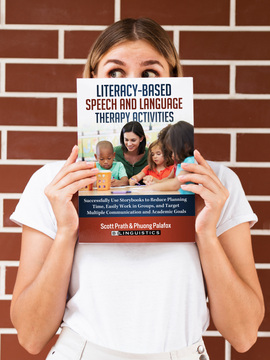
I had the privilege of sharing the book closet with the reading specialist on one campus that I was serving. I got the opportunity to learn a lot about reading and how to improve my use of storybooks in sessions. Here are some great insights.
1. Is phonological awareness the same as phonemic awareness?
Not exactly. Phonological awareness is the umbrella term; phonemic awareness is the smallest piece, focusing on individual sounds.
2. Do I use letters or print during PA instruction?
No, not until students are ready for phonics. Phonological awareness is oral and auditory.
3. What’s the most critical skill for reading success?
Phoneme blending and segmenting are the best predictors of early decoding ability.
4. How much time should I devote to PA to make a difference?
Ten to fifteen minutes per week, embedded in current therapy activities is sufficient when sessions are brisk and interactive.
5. How does phonological awareness relate to speech therapy goals?
If you target final consonants, clusters, or sound sequencing, you’re already strengthening PA. Tie those articulation goals to literacy outcomes for even more value.
References
- ASHA. “Speech Sound Disorders: Articulation and Phonology.” ASHA Practice Portal. Accessed Nov 2025.
- IES/REL Appalachia. “Evidence-Based Practices for Teaching Phonological and Phonemic Awareness.” U.S. Dept. of Education, 2019.
- Reading Rockets. “Phonological and Phonemic Awareness.” Accessed Nov 2025.
- Hogan, T. P., et al. “The Relationship Between Phonological Awareness and Reading.” Scientific Studies of Reading, 2005.
- Phillips, B. M., et al. “Successful Phonological Awareness Instruction with Preschool Children.” Topics in Early Childhood Special Education, 2008.


 Share
Share
 Tweet
Tweet
 LinkedIn
 Pin
Pin
 Email
Email