


Most of us were trained to evaluate and treat communication disorders within relatively stable systems. Schools had predictable enrollment patterns. Communities shifted gradually. Language diversity grew, but at a pace that allowed programs and training to adapt.
In the past several years, that stability has changed.
Across the United States and Canada, migration patterns have accelerated. Some shifts are international and visible. Others are domestic and largely unnoticed outside of local communities. Together, they are reshaping classrooms, caseloads, and professional expectations at a pace few systems were designed to handle.
This is not a story of crisis. It is a story of movement. And movement always changes the work. If you just arrived here, this is essay two in a series on the changing landscape of the field of speech language pathology. To begin at the top, click here: Are Speech Language Pathologists Truly Happy With Their Jobs?
Defining the Challenge: Migration at Multiple Levels
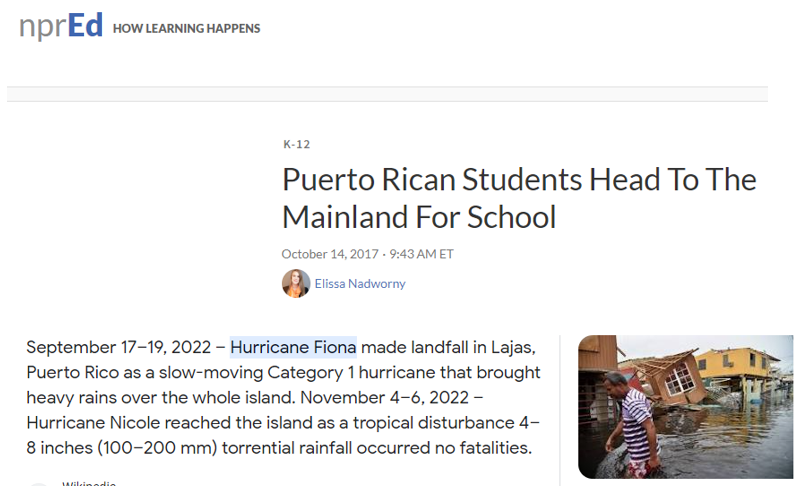
When we hear about environmental events, we often think of major hurricanes, wildfires, or global catastrophes that cause international migration. Those events certainly affect schools. A single large event can bring dozens of new students into a district overnight, sometimes with interrupted schooling, incomplete records, or active Individualized Education Programs that require review and reinterpretation.
However, large events are only part of the picture.
Research on environmental change consistently shows that the majority of displacement events are smaller, localized occurrences. Flooding, drought, fires, contaminated water supplies, and regional economic disruptions often lead to domestic migration rather than international relocation. Families move across counties or state lines. Communities reorganize quietly.
For speech language pathologists, this translates into several practical realities:
- Students enrolling midyear with existing IEPs that must be reviewed and sometimes re-evaluated
- Incomplete or incompatible documentation systems across districts
- Children presenting with stress responses that overlap with communication concerns
- Classrooms that shift demographically within a single academic year
The pace of change may feel sudden, but the broader pattern is not random. Environmental and social shifts are part of a larger global movement of people. Schools are often the first institutions to absorb that change. And it's not just the students! In the fires that plagued the West Coast, SLPs and educational professionals were also displaced. Often, they stayed with a sibling or other family members to get established in another community while theirs were rebuilt.

Increased Diversity and Increased Complexity
As communities shift, linguistic and cultural diversity expands. In some regions growth has been steady over decades. While in other areas, demographic change has been rapid and dramatic. Districts that historically served relatively homogeneous populations may now support dozens of languages.
For speech language pathologists, this brings both opportunity and complexity.
On the opportunity side:
- Greater cultural and linguistic diversity enriches classrooms and communities
- Bilingualism is increasingly recognized as an asset rather than a deficit
- Students who maintain their home language gain long-term cognitive and social benefits
On the complexity side:
- Assessment requires deeper cultural and linguistic competence
- Differentiating difference from disorder becomes more nuanced
- Collaboration with interpreters and multilingual staff becomes essential
- Professional development must expand to meet new linguistic realities
None of these developments are inherently negative. In fact, they reflect a dynamic and globally connected society. However, they do require additional cognitive and administrative effort from clinicians who are often expected to adapt quickly without corresponding adjustments in workload or resources.
It's important to note how quickly these changes happen. Anyone who has worked since 2015-2019 knows that our job is not that different. This knowledge really makes me feel better that what I am sensing and the difficulties I face are not completely due to my inability to do the job anymore. When added to the political, economic, and technological changes we will discuss in the next three essays it becomes a little more clear what we are up against.
The Hidden Layer: Trauma, Transition, and Overlapping Needs
Environmental and migratory shifts do not only change language profiles. They also influence emotional and behavioral presentation. This is NEVER discussed on my caseload.
Yes, I have the obvious number: more students.
And, yes, I have the obvious complexity: more bilingual families.
But what metric covers the fact that my little guys may have lost their house, all of their friends, and potentially have a family that is split up? And I am supposed to get these parents to meetings and get these children to move their goals?
I am proud to be in a position to serve these families. But is my job more complex? Absolutely.
What is the result of rapid transition from a stable home?
When a child has recently relocated due to environmental disruption or family stress, it can be difficult to disentangle:
- Communication differences related to language exposure
- Stress responses related to relocation
- Academic gaps related to interrupted instruction
- True underlying communication disorders
This layered complexity requires careful clinical reasoning. It requires time. It requires collaboration. Speech language pathologists are often among the first professionals asked to evaluate a child who is struggling academically or behaviorally after a move. That responsibility reflects trust in our expertise. It also adds to the cognitive load of decision making.
Again, this is not cause for complaint. It is simply an acknowledgment that the work has become more layered.
A Broader Perspective: Movement Is Not New
It is important to remember that migration and environmental shifts are not new phenomena. The history of the United States and Canada is deeply rooted in movement. Communities have always been shaped by relocation, adaptation, and integration.
What is different now is the speed and visibility of change.
We are living in a period where communication technologies make global events immediate and migration patterns more fluid. Schools reflect that immediacy. Classrooms can change from one year to the next in ways that were less common in previous decades.
Seen through this lens, the increased diversity and complexity in our caseloads are not signs that something is broken. They are signs that our profession sits at the intersection of education, health, and global movement.
That is a position of significance.
A Positive Frame: Why This Matters
There is another way to view environmental change and demographic diversity:
We are educating and supporting the next generation of professionals in a world that is increasingly interconnected.
We are not only supporting individual students. We are shaping a workforce that will include multilingual physicians, engineers, teachers, diplomats, and community leaders.
Environmental change increases the complexity of our work. It also increases its importance. By acknowledging WHY our jobs have become more difficult, it takes the spotlight off of personal flaws and empowers us to use our incredible skillset to help people communicate in a great time of need.
Read On
In the next article, we will examine the economic forces that intersect with environmental change. Economic shifts influence where families move, how communities grow, and how school systems allocate resources.
Understanding these patterns allows us to interpret changes in our caseloads not as isolated frustrations, but as part of larger structural movements.
Clarity reduces confusion. And when we understand the forces shaping our work, we are better positioned to respond thoughtfully and lead confidently within them.
A Brain-Based Approach to Increase Success and Satisfaction in Your Work Life
If you would like to earn ASHA CEUs and hear the entire story which includes solutions to address increases in our workload, I recorded a presentation that was part of a keynote address.


 Share
Share
 Tweet
Tweet
 LinkedIn
 Pin
Pin
 Email
Email

