


There’s a reason kids love shouting out the same line in a favorite story—it’s the power of repetition of a phrase. Stories that use repetition of words or phrases are more than just fun and engaging; they provide valuable opportunities to build language, memory, and participation skills in speech therapy sessions.
In this post, we’ll explore how repeated phrases support language development, especially for children with speech and language delays. You’ll find examples of books that use repetition of a word or phrase, tips for choosing the right ones, and creative ways to use them in therapy. If you're looking to boost expressive language, sentence structure, or confidence in young communicators, repeated phrases can be your secret weapon.
Repetition of Phrase stories are great books for speech therapy because:
- The repetition of a word or phrase from the story allows young readers to participate and/or chant along with the story, further engaging them in the chain of events
- They are especially conducive to teaching inferencing and prediction-making skills for children before they can read on their own
- Children can anticipate what’s coming next, which develops increased confidence in establishing basic reading skills
- Having the repetition of a word or phrase built into the story can easily provide numerous opportunities for exposing children to new syntactical rules
- They are often great books for re-reading, as they include a sequence and vocabulary children can anticipate
- The repeated phrases can be very helpful in practicing a targeted speech sound or phonological process
- Familiarity and predictability guide children to develop increased understanding and comprehension of material, which is why children will often beg us to re-read a book or continue with a familiar series – great for building vocabulary and helps us support academic skills at the same time!
Functions of repetition in conversation (2009)
How to Use Repetition of a Phrase Story in Speech Therapy
Bear on a Bike/Oso en Bicicleta:
| Communication Area | Goal |
|---|---|
| Articulation | Bilabials /b/ and /p/, velars /k/ and /g/, final /r/, /ng/ in present progressive action words (i.e., ‘swimming’, ‘riding’). Spanish: Medial and final /s/, consonant clusters with /r/ and /l/, medial /d/ in present progressive forms (i.e., ‘nadando’, ‘montando’) |
| Syntax | Present progressive formsFuture tense3-5 word utterances |
| Semantics | Transportation vocabulary (car, boat, plane, etc.)Categories (fruit, animals, places)Action words |
| Wh- questions | What, who, where, when questions |

One of our favorite Repetition of Phrase books for speech therapy: Bear on a Bike/Oso en Bicicleta
This is one part of a series of beautifully illustrated and written books that revolve around a bear’s journeys around and outside of his town. This particular book fits neatly into the Repetition of Phrase category, and also is wonderful for targeting many basic concepts and vocabulary. Bear on a Bike contrasts travel by land, water and air, which lends itself to creating a set of activities that help children compare and categorize means of transportation. The context of transportation can easily facilitate working on a wide range of speech and language goals.
Use a worksheet of transportation categories as a pre-reading activity to gather information about student familiarity with vocabulary and teach relevant terms:

Create a post-story articulation bingo activity with vocabulary from the story

Finally, have children use a template to make a personalized book to review and present, practicing their speech sounds and new knowledge:

These are just some ideas that scratch the surface; we can create other activities to support and enhance children’s understanding of the material and reinforce our goals using other categorization, sequencing, and discussion activities – the sky is the limit!
Great Books for Speech Therapy that Use Repetition of Phrase Stories
Below, you will also find a list of some of our other favorite Repetition of a Phrase Stories. Some can only be found in English at this time, but are books that we commonly translate into Spanish and have basic enough vocabulary that it is easy to do on the fly. We have also included direct links to purchase your favorites through Amazon. We would love to hear from you on how YOU use these books in therapy!
| English | Spanish | Description of Story |
|---|---|---|
Goodnight Moon
|
Buenas Noches Luna
|
Plot: A classic bedtime story with goodnight wishes from a sleepy rabbit. Why we like it: A soothing story for bedtime or a classroom routine (before naptime story), excellent for labeling and describing, increasing vocabulary and targeting 2-3 word phrases. |
Do You Want to Be My Friend?
|
No Spanish version available. | Plot: A little mouse meets many animals while bravely looking for a friend. Why we like it: A simple story with not much text, this is a nice book for teaching retell and predicting skills. |
Is Your Mama a Llama?
|
Tu mama es una llama?
|
Plot: Six baby animals help a baby llama find his mother. Why we like it: Repetitive, Q&A, Rhyming, this short story is good for presenting second person, working on sounds and phonological skills and developing prediction skills. |
Brown Bear, Brown Bear, What Do You See?
|
Oso pardo, oso pardo, que ves ahi?
|
Plot: Successive animals ‘pose’ questions asking the reader to turn the page and see which animal is next. Why I like it: Repetitive and rhythmic, this book for early readers is great for simple labeling, nouns, adjectives and colors, along with targeting 2-4 word combinations (I see...a horse/Yo veo...un caballo). |
Bear On a Bike
|
Oso En Bicicleta
|
Plot: A bear, a boy and a dog travel many lands, looking for adventure. Why we like it: A wonderful book for Pre-k and Kinder aged kids to introduce categories (transportation, places, foods), sequence and time concepts, and plenty of articulation targets (/r/ clusters, /s/ in all positions). |
I Went Walking
|
Sali de paseo
|
Plot: A little boy goes for a walk and greets a series of animals on the way. Why we like it: Repetitive, cumulative: I took a walk, and this is what I saw. Great for First person, past tense, animals, simple sentence structure. |
Jump, Frog, Jump!
|
Salta Ranita, Salta!
|
Plot: A traveling frog evades his prey hopping from page to page. Why we like it: Repetitive, Cumulative story to use for articulation and phonological processes (English: /r/ clusters, Spanish initial /rr/ and /s/. |
Mortimer
|
Mortimer - espanol
|
Plot: The story of a little boy who won’t go to sleep at night and keeps his family up.Why we like it: A repetitive format that kindergarten aged students will enjoy - great book to get children chanting and singing, could be used for a student with fluency and/or phonological impairments. |
No, Titus, No!
|
No, Tito, No!
|
Plot: A fox and other animals help a dog understand his role on the farm. Why we like it: Helpful for teaching young children their role at home, great for working on labeling, describing actions, and teaching pragmatics skills. |
The Three Billy Goats Gruff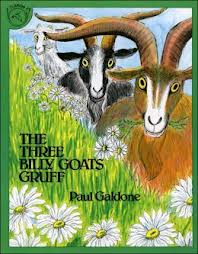 |
Los Tres Chivitos
|
Plot: A lovely version of the classic tale of the three billy goats who have to evade a troll to cross a bridge. Why we like it: This book is appropriate for students from Kinder to 2nd grade, and can easily be adapted based on what the children are working on, good for comparing/contrasting, describing shapes and sizes, /r/ clusters in Spanish and /g/ and /th/ in English |

Want to Get More Out of Your Speech Therapy? - Use Predictable Books
There are eight different types of predictable books as well as ways to use all the different types of predictable books with games. We can use these eight groups to categorize the books we read and get a better understanding of what each book has to offer. These predictable categories also enable us to better define WHY our favorite books for speech therapy are successful, thus helping identify other book titles for future sessions. Click on each story type to read more about each type of predictable books.
- Justifying the Use of Speech Therapy Games with Literacy Research
- Familiar Sequence Story: A common, recognizable theme such as the days of the week, the months, etc. Example: Today is Monday
- Chain or Circular Story: The story's ending leads back to the beginning. Example: Where the Wild Things Are
- Cumulative Story: The story builds on a pattern. It starts with one person, place, thing, or event. Each time a new person, place, thing, or event is shown, all the previous ones are repeated. Example: There was an Old Lady Who Swallowed a Fly
- Question and Answer Book: A question is repeated throughout the story. Example: Brown Bear, Brown Bear
- Repetition of Phrase Book: A phrase or sentence is repeated. Example: Goodnight Moon
- Rhyme Book: A rhyme, refrain, or rhythm is repeated throughout the story. Example: Chicka Chicka Boom Boom
- Song Book: Familiar songs with repeated phrases, sentences, rhymes, or refrains. Example: Five Little Monkeys
- Pattern Story: The scenes or episodes are repeated with a variation. Example: Froggy Gets Dressed
Note that predictable themes are easier to identify with books written for younger children. We often see more overlap of characteristics in different types of predictable books in stories written for older children, as they contain more story elements.

For loads more information about fun intervention strategies that incorporate books, be sure to check out our book, Literacy-Based Speech and Language Activities.
And if you want to earn CEUs and learn how to effectively learn how to use storybooks in intervention and make games, check out the Literacy-Based Everything Pack
 Share
Share
 Tweet
Tweet
 LinkedIn
 Pin
Pin
 Email
Email


