

Hungarian, known natively as Magyar, represents one of the most distinctive languages in Europe. Hungarian belongs to the Finno-Ugric group of the Uralic language family, sharing distant linguistic roots with Finnish and Estonian, though it has evolved quite differently from its relatives over millennia. The Finno-Ugric languages descended from a Proto-Uralic language that originated around 4,000-8,000 BCE in the Ural Mountains region, with Hungarian speakers eventually migrating westward into the Carpathian Basin. What makes Hungarian particularly interesting for linguists studying Hungarian speech and language development is its unique position as a non-Indo-European language surrounded by Indo-European neighbors, resulting in significant vocabulary borrowing while maintaining its distinctive grammatical structure.
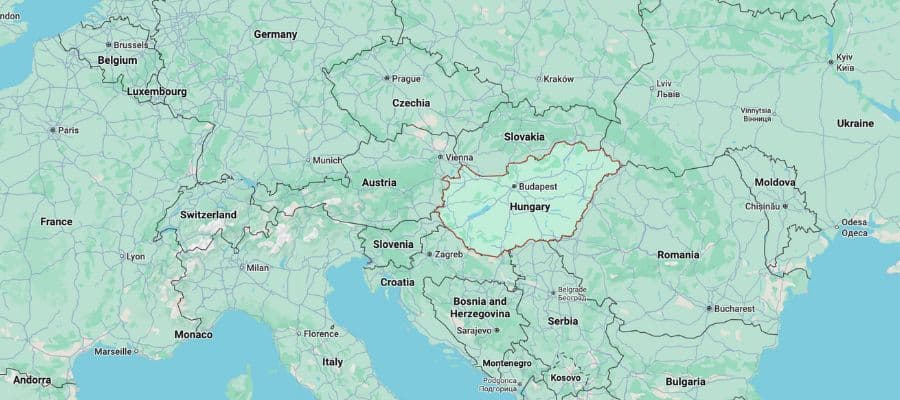
Hungarian is spoken by approximately 13-15 million people worldwide, serving as the official language of Hungary. Beyond Hungary's nearly 9.9 million speakers, substantial Hungarian-speaking populations exist in neighboring countries that were once part of the historical Kingdom of Hungary, mainly in Romania's Transylvania region, Slovakia, Serbia, and Ukraine. The language has also spread globally through diaspora communities, with populations in North America, particularly the United States and Canada. The U.S. Census Bureau estimates that around 1.4 million Americans claim Hungarian ancestry as of 2018. This global distribution makes Hungarian not only a regional European language but also an important heritage language for immigrant communities worldwide.
This article will cover Hungarian differences from English so you can accurately work with bilingual clients.
Interesting Facts About Hungarian Speech and Language Development
- Hungarian has 18 different grammatical cases, far more than most European languages. These allow for incredibly precise expressions of relationships between objects and actions. Verbs in Hungarian are conjugated according to definiteness, tense, mood, person and number, meaning the verb form changes depending on whether the object is definite or indefinite.
- Because of its confusing rules and its construction, a lot of people would put Hungarian somewhere in the top 10 hardest languages to learn in the world!
- About 20% of Hungarian vocabulary consists of loanwords borrowed from neighboring Slavic languages! It manages to maintain its unique grammar while including loanwords from across the world.
Hungarian Speech and Language Development
Hungarian Consonants in Comparison to English
| Hungarian Consonants Not Shared with English | /c/ /ɟ/ /ɲ/ /ʎ/ /r/ /dz/ /ts/ /ʃʲ/* |
| Consonants Shared With English | /p/ /b/ /t/ /d/ /k/ /g/ /f/ /v/ /s/ /z/ /ʃ/ /tʃ/ /m/ /n/ /j/ /l/ |
| English Consonants Not Shared with Hungarian | /ʒ/ /dʒ/ /h/ /ŋ/ /ð/ /θ/ /ɹ/ /w/ |
*/ʃʲ/ is an allophone of the /j/ phoneme.
Hungarian Vowels in Comparison to English
| Hungarian Vowels Not Shared with English | /ø/ /y/; Long vowels: /øː/ /yː/ /uː/ /iː/ /ɛː/ /aː/ /oː/ |
| Vowels Shared With English | /a/ /i/ /u/ /e/ /o/ /ɛ/ |
| English Vowels Not Shared with Hungarian | /ɚ/ /ɔ/ /ʌ/ /ʊ/ /I/ /æ/ /ə/ |
Notes on Hungarian Phonology
- Hungarian /r/ is a trilled or tapped sound, not the English approximant /ɹ/.
- Hungarian has palatalized sounds and affricates like /dz/ and /ts/ that aren't standard in English.
- Hungarian lacks English-specific fricatives like /θ/, /ð/, and /ʒ/, and glides like /w/.
- Hungarian has a vowel length contrast, e.g., /a/ vs. /aː/, which English does not.
- Rounded front vowels like /ø/ and /y/ are common in Hungarian but absent in English.
- English includes many reduced vowels and diphthongs that Hungarian does not.
The Use of Phonotactic Constraints in Hungarian Speakers
Hungarian imposes specific phonotactic rules on sound sequences and syllable structure that can affect how native speakers produce English words. These constraints often influence consonant clustering, vowel selection in suffixation, word‑final vowel length, and assimilation patterns. When Hungarian‑speaking children learn English, typical transfer patterns can look like omissions, substitutions, or unexpected stress or length changes. Clinicians should be aware of common constraints to distinguish second‑language influence from clinical error.
| Phonotactic Constraint in Hungarian | Likely Effect on English Production |
|---|---|
| Vowel harmony: suffix vowels must match backness and frontness of root vowel; neutral vowels (i, í, e, é) behave unpredictably (ling.hhu.de, Wikipedia) | English plurals or suffixes may be simplified or omitted if vowel harmony rules conflict (e.g., “cats” → cats but may reduce vowel quality or omit plural marker) |
| Restriction: short /o/ and /ö/ cannot occur in final position in stems; word‑final stem vowels /o˘/ and /ö˘/ must be lengthened or are avoided (theswissbay.ch) | Final English vowels in words like “go” or “no” may be lengthened or misarticulated if child transfers length rule |
| Maximal syllable template: Hungarian prohibits complex coda clusters; often falls into VVCC template but CC clusters are limited (pweb.ldc.upenn.edu) | English clusters like “desk” or “milk” may be simplified (e.g., des, mil) or consonants reduced |
| Assimilation of voicing in consonant clusters: devoicing or voicing spreads within obstruent clusters (Wikipedia) | English clusters such as “dogs” /g/ may be devoiced to /k/ before /s/, producing dok s rather than dogz |
| Degemination: Hungarian long consonants shorten between consonants (e.g. folttal → foltal) (Wikipedia) | English geminates (e.g., “hopping”) might get shortened or assimilated into single consonant, losing phonemic contrast (/p‑p/ → /p/) |
| Intercluster elision: medial alveolar stops may be omitted in certain clusters (e.g. t in “stratégia”) (Wikipedia) | English sequences like “street” may be simplified: sreet, or “strength” may lose consonant: streng |
Considerations for SLPs and Teachers
- Be alert to omissions or alterations in English suffixes due to Hungarian vowel harmony or final vowel constraints.
- Expect cluster simplification, especially in word-final or medial English clusters—commonly seen as consonant deletions.
- Voicing assimilation may lead to devoiced consonants where English expects voicing (e.g. “dogs” /z/ pronounced as /s/).
- Length distinctions, particularly with final vowels or consonants, may not carry over; what is meaningful in Hungarian may be neutralized in English output.
Language Specific Differences Between English and Hungarian
Hungarian and English differ notably in grammar despite some surface similarities. Hungarian has a flexible word order due to extensive case marking, while English relies heavily on a fixed Subject-Verb-Object (SVO) order. Hungarian does not use articles, unlike English which requires definite and indefinite articles. Verb tenses in Hungarian are simpler, without a present progressive form, and modals function differently. Additionally, Hungarian has no grammatical gender, but it uses extensive verb inflections and case endings to mark grammatical relationships.
| Language Features | Hungarian | English (fixed) |
|---|---|---|
| Sentence Word Order | Flexible due to cases; often SVO but can vary for emphasis | Fixed SVO |
| Adjectives/Noun Modifiers | Adjectives precede nouns; no gender agreement | Adjectives precede nouns |
| Possessives | Possession expressed with possessive suffixes attached to nouns or possessive pronouns | Use apostrophe-s or "of" constructions |
| Possessive Pronouns | Agree with possessed noun in number and case | No case inflection |
| Verb inflection | Conjugated for person and number; definite and indefinite conjugations | Conjugated for person and number only |
| Pronouns | No gender distinction in third person singular pronouns | He/She/It distinct pronouns |
| Pronoun Gender | No grammatical gender | Gendered pronouns |
| Subjects of Sentences | Can be dropped (pro-drop) | Subject required |
| Regular Past Tense | Past tense marked by suffixes, no separate past participle | Regular -ed endings |
| Irregular Past Tense | Fewer irregular verbs; past tense marked with suffixes | Many irregular verbs |
| Negatives | Negation formed by prefix "nem" before verb | Negation formed with "not" and auxiliary verbs |
| Double Negatives | Double negatives are grammatically correct | Double negatives considered incorrect |
| Question formation | Uses question particles or intonation; word order can remain SVO | Uses auxiliary inversion (Do-support) |
| Definite Articles | None | Definite article "the" |
| Indefinite Articles | None | Indefinite articles "a/an" |
| Prepositions | Postpositions or suffixes attached to nouns; case system conveys meaning | Fixed prepositions |
| Present Progressive Verb Form | No separate present progressive form; simple present used | Present progressive "be + -ing" |
| Modal Verbs | Modal meanings expressed with verbs or suffixes; no separate modal verbs | Modal verbs like can, must, should |
| Copula/"To Be" Verbs | Copula sometimes omitted; verb "van" used for existence | Copula always used |
| Auxiliary Verbs | Auxiliary verbs used for tense and mood | Extensive use of auxiliary verbs |
| Passive Voice | Formed with verb "lenni" + participle; less frequent | Commonly used passive form |
| Direct Object Pronouns | Attached as suffixes to verbs | Separate pronouns |
| Conjunctions | Conjunctions similar to English (és = and, de = but) | and, but, because, that |
| Plurals | Formed with suffixes; multiple plural forms depending on noun class | Regular plural -s/es; some irregular plurals |
Additional Uralic and Turkic Languages
This is just one of several Uralic and Turkic languages featured in our World Language Library. Click below to explore languages with unique phonological and grammatical structures from Central and Northern Eurasia.
| Finnish | Hungarian | Azerbaijani |
| Uzbek | Turkish |
Sources:
"Finno-Ugric Languages." EBSCO Research Starters.
"Finno-Ugric Languages: Categorisation and What Makes Them Interesting?" Lexika, 20 Jan. 2023.
Grimes, Stephen M. Quantitative Investigations in Hungarian Phonotactics and Syllable Structure. PhD diss., Indiana University, 2010. (ResearchGate)
"How Many People Speak Hungarian and Where Is It Spoken?" Talkpal, 25 June 2024.
"Hungarian." Penn Language Center, University of Pennsylvania.
"Hungarian Americans." Wikipedia, 29 June 2025.
"Hungarian Language." Wikipedia, 2025.
"Hungarian Language - Worldmapper." Worldmapper, 4 Mar. 2020.
"Hungarian Learning Community and Resources: How many people speak Hungarian?"
"Hungarian Grammar." Wikipedia, Wikimedia Foundation, 2025, https://en.wikipedia.org/wiki/Hungarian_grammar.
"Hungarian phonology." Wikipedia, Wikimedia Foundation, 2025. (Wikipedia)
Kálmán, László. Hungarian Grammar. Akadémiai Kiadó, 2006.
Ladefoged, Peter, and Ian Maddieson. The Sounds of the World's Languages. Wiley-Blackwell, 1996.
Sipőcz, Andrea. Hungarian Language Basics. Debrecen University Press, 2011.
Siptár, Péter, and Miklós Törkenczy. The Phonology of Hungarian. Oxford University Press, 2007.
"Uralic language family." Finno-Ugric Peoples, 18 Apr. 2021.
Contributors:
A special thanks to Kinsey Weyer with Concordia University Wisconsin for data compilation and research that went into this article!