
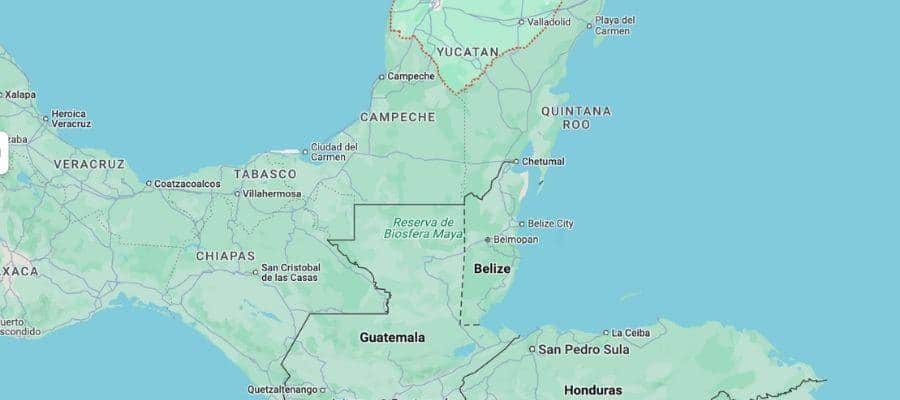
The Mayan language family encompasses a diverse group of indigenous languages spoken primarily in Mexico, Guatemala, Belize, and parts of Honduras and El Salvador. With over 30 distinct Mayan languages, each with unique phonological and grammatical features, understanding Mayan speech and language development is essential for effective assessment and intervention.
Within the Mayan family, K’iche’ and Kaqchikel are two prominent Indigenous languages in Guatemala, both belonging to the Quichean Proper branch of the Mayan language family. K’iche’, spoken by over one million people, is the second most widely spoken language in Guatemala after Spanish. It is primarily used in the western highlands and parts of southern Mexico, where it forms an integral part of daily communication and cultural expression among the K’iche’ people.
Kaqchikel, closely related to K’iche’, has around 410,000 native speakers, primarily in central Guatemala. While both languages are actively spoken within their communities, only K’iche’ enjoys official recognition as a minority language in Guatemala and Mexico.
In this article, we’ll explore key aspects of Mayan speech and language development such as vocabulary, phonology, consonants, and language development to help you better support children who speak these Mayan languages in educational or clinical settings.
Interesting Facts About Speech and Language Development in Mayan Languages
- The “Popol Vuh” is a detailed text that details the mythology and history of the K’iche people, and it was originally written in Classical K’iche.
- Kaqchikel is taught in public schools through Guatemala’s intercultural bilingual education programs.
- Names in K’iche often have significant meanings related to nature or spirituality.
- Mayan languages are considered agglutinative, meaning they use a system of root words that can be modified with prefixes and suffixes to indicate possession or subject and object.
Comparing K’iche’ and Kaqchikel: Dialectal Features within the Mayan Family
K’iche’ and Kaqchikel are closely related Mayan languages within the K’ichean branch, both spoken in Guatemala’s highlands. They share many grammatical traits—such as verb-initial word order (often VOS), use of ejective consonants, and vowel length distinctions in certain dialects—while differing in phonological details, prosody, and some morphological elements. For instance, K’iche’ maintains a ten-vowel system (short vs. long vowels), whereas Kaqchikel often merges these, reducing vowel length distinctions. Both languages use ejectives and glottal stops, but K’iche’ features more complex consonant clusters arising from vowel syncope, and Kaqchikel allows certain clusters only across morpheme boundaries. Below is a phoneme comparison to illustrate some key sound differences:
Phonological Comparison: K’iche’ vs. Kaqchikel
| Feature | K’iche’ | Kaqchikel |
|---|---|---|
| Vowel inventory | Retains 10-vowel contrast (5 short vs. long); syncope common (en.wikipedia.org, wikimili.com) | Variable inventory: 5 tense + 1–5 lax vowels; length often neutralized |
| Glottal stops | Frequent due to syncope; marks syllable boundaries | Common in onset; dialect variation in glottal stop insertion |
| Ejective consonants | Includes /p’ t’ ts’ tʃ’ k’ q’/ | Includes similar ejectives; implosive /b’/ in some dialects |
| Consonant clusters | Complex onsets via vowel syncope | Clusters in roots rare; appear across morpheme boundaries |
| Uvular consonants | /q/ and /q’/ preserved | /q’/ often realized as voiceless uvular implosive in word-final position |
| Prosody & stress | Fixed stress on final syllables, iambic patterns; vowel syncope shapes rhythm | Prosodic prefixes; glottal stop insertion tied to prosodic word structure |
Summary
- Vowel Systems: K’iche’ preserves a robust vowel length distinction, unlike most Kaqchikel dialects.
- Consonants: Both employ ejectives and glottal stops, but realization differs (e.g., Kaqchikel’s uvular implosive).
- Phonotactics: K’iche’ allows more consonant clusters due to frequent vowel loss; Kaqchikel prefers simpler roots.
- Prosody: K’iche’ stress is syllable-based and contributes to rhythmic patterns, while Kaqchikel uses prefix-related prosody influencing glottal stop usage.
These differences are phonological and prosodic rather than grammatical, meaning speakers of both languages share core syntax and morphology, yet their speech rhythms and sound inventories diverge. Including dialect-specific support in assessments and materials ensures responsiveness to both K’ichean languages.
Mayan Speech and Language Development
Mayan Consonants in Comparison to English
| Mayan Languages Consonants Not Shared with English | /ɓ/*/pʼ/*/tʼ//kʼ/ /ts/*/tsʼ/ /tʃʼ//ʔ//q/ /qʼ/*/x/*/ɾ/* /tʲ/* /tʲ'/* |
| Consonants Shared With English | /p/ /t/ /k/ /s/ /ʃ/ /tʃ/ /h//m/ /n/ /ŋ/ /l/ /j/ /w/ |
| English Consonants Not Shared with Mayan Languages | /b/ /d/ /g/ /f/ /v/ /z/ /ʒ/ /dʒ/ /ð/ /θ/ /ɹ/ |
*exists in some Mayan language dialects or loanwords
Mayan Vowels in Comparison to English
| Mayan Languages Vowels Not Shared with English | /aː/ /eː/ /iː/ /oː/ /uː/ |
| Vowels Shared With English | /a/ /e/ /i/ /o/ /u/ |
| English Vowels Not Shared with Mayan Languages | /ɚ/ /ɔ/ /ʌ/ /ʊ/ /ɛ/ /I/ /æ/ /ə/ |
Notes on Comparison of Mayan Consonants and Vowels with English
- Consonants: Mayan languages feature ejective consonants and a uvular stop /q/, which are not present in English. Shared sounds include voiceless stops, nasals, liquids, and glides. Voiced stops, fricatives, liquids, like /ɹ/, are absent.
- Vowels: Mayan distinguishes long and short versions of its five basic vowels, a contrast that English does not typically mark ♀. en.wikipedia.org+7en.wikipedia.org+7en.wikiped
The Use of Phonotactic Constraints in Mayan Speakers
Here are phonotactic constraints for Mayan language speakers.. These reflect patterns found in Mayan languages—particularly Yucatec and Uspanteko—that influence how speakers might approach English.
Mayan languages exhibit clear phonotactic rules determining permissible sound sequences and syllable structures. These rules significantly differ from English patterns and can affect how speakers might transfer sounds when learning English. Recognizing these constraints helps speech-language pathologists interpret pronunciation differences accurately and avoid misdiagnosing typical dialectal variations as errors.
Key Phonotactic Constraints in Mayan Languages:
- Syllable Structure – CV(V)(C) Template
Mayan words generally follow a structure of consonant + vowel (possibly long) + optional consonant (CVC or CVCC). Onsets are obligatory, and codas appear in native roots (people.ucsc.edu, konferens.ht.lu.se, en.wikipedia.org). - No Complex Onsets in Roots
Native Mayan words do not allow consonant clusters at the beginnings of roots. Complex onsets appear only across affix boundaries, and speakers often insert a vowel if a cluster would occur within a root (escholarship.org). - Restriction on Glottalized Consonant Co-Occurrence
When two glottalized consonants appear in a root, they must be identical. Similarly, sibilants in CVC roots must share place of articulation (escholarship.org). - Limited Consonant Clusters in Codas
Clusters in codas are typically restricted to a consonant plus a glottal stop or a laryngeal consonant (like [h] or [ʼ]), but clusters across morpheme boundaries may occur (en.wikipedia.org). - Ejective and Glottal Constraints
Ejectives (/p’ t’ k’ ts’ tʃ’ q’/) and glottal stops (/ʔ/) are preferred, but ejective-ejective or plain-ejective sequences within a single root are disallowed (jstor.org). - Vowel Harmonic and Moraic Weight Constraints
Long vowels (CVV) and closed syllables (CVC) are treated as heavy and carry tone. Heavy syllables tend not to occur consecutively within a word; if they arise, one is typically mitigated via vowel shortening or segmentation (konferens.ht.lu.se, roa.rutgers.edu).
Implications for English Speech Productions by native speakers of Mayan
- Expect epenthesis when Mayan speakers attempt English CC clusters (e.g. play → pəlej).
- Glottal stops may appear before vowels or as replacements for English stops in coda position.
- Ejectives and glottalized sounds contrast sharply with English phonology and may be aspirated.
- Avoidance of canonical English clusters without vowel insertion.
- Adjacent heavy syllables may be split or altered, impacting English stress patterns.
Language Specific Differences Between English and Mayan Languages
Mayan languages (e.g., Yucatec Maya) exhibit grammatical structures that differ notably from English, with features shaped by ergative alignment and verb-initial syntax. In Mayan, the typical word orders are VOS or VSO, unlike English’s SVO. Adjectives generally follow nouns, and possession is marked via prefixes on nouns rather than separate possessive pronouns. Verb tense and aspect are expressed through aspect markers and morphological inflection, not auxiliary verbs. Plurality, articles, gender, and negation also operate differently: Mayan lacks articles, uses aspect rather than tense, and indicates plurality or definiteness morphologically rather than with separate words. Clinicians should be aware of these differences to differentiate dialectal structures from language impairments.
| Language Features | Mayan (e.g., Yucatec Maya) | English |
|---|---|---|
| Sentence Word Order | VOS or VSO, verb-initial; topic-comment structure overrides order (en.wikipedia.org, en.wikipedia.org) | SVO |
| Adjectives/Noun Modifiers | Adjectives follow nouns | Adjectives precede nouns |
| Possessives | Possessor expressed via possessive prefixes/suffixes on the noun (ergative system) | Possessor precedes noun + ’s |
| Possessive Pronouns | Bound pronouns on verbs/nouns; no standalone possessive pronouns | my, your, his, her, etc. |
| Verb inflection | Extensive marking for aspect, transitivity, person, and number | Verbs change for tense |
| Pronouns | Ergative–absolutive system, prefixes and suffixes differ by argument roles | Independent pronouns |
| Pronoun Gender | No gender distinctions | he, she, it |
| Subjects of Sentences | Can be omitted; subject encoded in verb morphology | Normally expressed |
| Regular Past Tense | No regular past suffix; aspect and inflection encode past | verb + -ed |
| Irregular Past Tense | As above—no irregular, same verb forms used | Irregular forms (went, saw) |
| Negatives | Negation by particles (e.g., ma’ before the verb) | Negation with “not” or auxiliary verbs |
| Double Negatives | Not commonly used | Present in dialects |
| Question formation | Interrogative pronoun + verb + (subject); no inversion | Auxiliary inversion (“Do you…?”) |
| Definite Articles | No definite articles | “the” |
| Indefinite Articles | No indefinite articles | “a,” “an” |
| Prepositions | Relational nouns and postpositions; limited simple prepositions | in, on, at |
| Present Progressive Form | No distinct -ing; aspect markers and inflection indicate ongoing action | verb + -ing |
| Modal Verbs | No standalone modals; modality expressed via aspect/morphology | can, will, must, etc. |
| Copula/"To Be" Verbs | Often omitted; state marked by nominalized verb forms | is, are, am |
| Auxiliary Verbs | No do-support; tense/aspect affixed directly to verb | do, have, be |
| Passive Voice | Rare; agent focus by voice, not typical English-style passive | “be” + past participle |
| Direct Object Pronouns | Marked as bound absolutive affixes, not separate words | me, him, her |
| Conjunctions | Simple conjunctions; polysynthesis uses affixation | and, but, or |
| Plurals | Plural indicated morphologically or contextually on verbs/nouns | noun + -s |
Additional Indigenous and Native American Languages
This is just one of the Indigenous and Native American languages that we’ve documented in the World Language Library. Click below to explore diverse languages from North, Central, and South America.
Sources:
Bennett, R. (2015, May 8). Mayan phonology. Language and Linguistic Compass.
Bennett, R., Coon, J., & Henderson, R. (2016). Introduction to Mayan Linguistics. Language and Linguistics Compass, 10(10), 455–468.
Bolles, D., & Bolles, A. (n.d.). Grammar of the Yucatecan Mayan language. famsi.org.
Brown, P. (1998). Children's first verbs in Tzeltal: Evidence for an early verb category. Linguistics, 36(4), 713–753.
Campbell, L. (1977). Quichean linguistic prehistory. University of California Press.
Campbell, & Lyle. (1998, July 20). K’iche’ language | Mayan, Guatemala, Indigenous. Encyclopedia Britannica.
“Classical K’iche’.” Wikipedia, Wikimedia Foundation, 2025. (en.wikipedia.org)
De León, L. (2001). Finding the richest path: Language and cognition in the acquisition of verticality in Tzotzil (Mayan). In M. Bowerman & S. C. Levinson (Eds.), Language acquisition and conceptual development (pp. 544–565). Cambridge University Press.
England, N. C. (2003). Mayan language revival and revitalization politics: Linguists and linguistic ideologies. American Anthropologist, 105(4), 733–743.
Hamann, A. (2019, January 1). Possessives in classic Mayan. Studies in Linguistics, Anglophone Literatures and Cultures.
Kʼicheʼ (Qatzijobʼal). (2025, January 19). Omniglot.
K’iche’ at UVA and Vanderbilt. Institute of World Languages. (n.d.).
“Mayan languages.” Wikipedia, Wikimedia Foundation, 2 weeks ago, https://en.wikipedia.org/wiki/Mayan_languages.
Maya writing. www.mayaarchaeologist.co.uk. (2025, April 16).
“Proto-Mayan language.” Wikipedia, Wikimedia Foundation, 14 June 2025, https://en.wikipedia.org/wiki/Proto-Mayan_language.
Pye, C., Pfeiler, B., & Mateo, P. (2017). Documenting the acquisition of indigenous languages. Journal of Child Language, 44(3), 469–500.
“Tzeltal language.” Wikipedia, Wikimedia Foundation, 20 June 2005, https://en.wikipedia.org/wiki/Tzeltal_language.
“Uspanteko.” Journal of Linguistics, Wiley, 2022.
Wikimedia Foundation. (2025, February 10). Kʼicheʼ language. Wikipedia.
Wikipedia contributors. (2025, February 10). Kʼicheʼ language. In Wikipedia, The Free Encyclopedia.
“Yucatec Maya Grammar.” FAMSI, https://www.famsi.org/research/bolles/grammar/section04.htm. (famsi.org)
“Yucatec Maya language.” Wikipedia, Wikimedia Foundation, 2025, https://en.wikipedia.org/wiki/Yucatec_Maya_language.
Contributors:
A special thanks to Diana Benitez and Tatiana Schurr at Florida Atlantic University for data compilation and research that went into this article!