
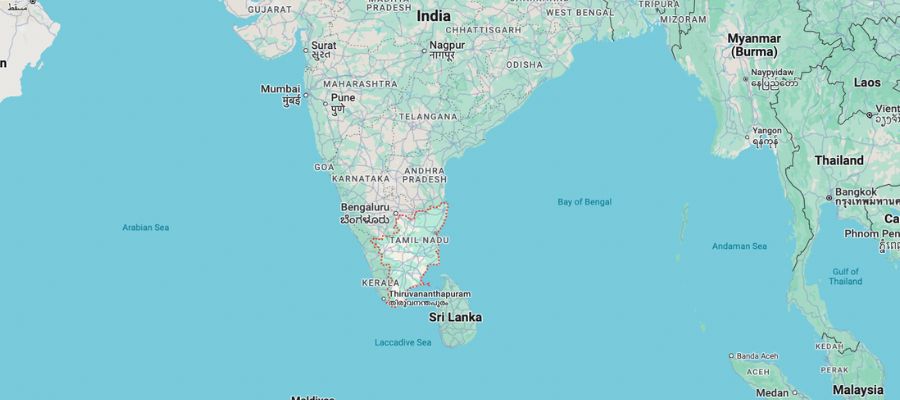
The Tamil language stands as one of the world's oldest continuously spoken languages. Tamil speech and language development stems from the Dravidian language family, which is distinct from the Indo-European and Sino-Tibetan language families that dominate much of the world. Three periods can be distinguished through analyses of grammatical and script changes: Old Tamil, Middle Tamil, and Modern Tamil. Tamil is an official language in three countries: India, Sri Lanka, and Singapore. The Tamil writing system, which evolved from the Brahmi script, features a syllabic structure that creates beautiful, flowing text.
Approximately 75 million people speak Tamil worldwide. The majority of Tamil speakers reside in India, particularly in the state of Tamil Nadu, with significant populations also found in Sri Lanka, Malaysia, Singapore, and Myanmar. In the United States, there are over 250,000 Tamil speakers, making it a notable heritage language in American communities. Tamil is also spoken on a smaller scale in countries like Canada, Australia, and the United Kingdom. The Tamil diaspora has established communities across these nations, often maintaining strong ties to their heritage while navigating the complexities of bilingual development in their new home countries.
For speech-language pathologists, teachers, and other educators, understanding the Tamil-speaking population's linguistic background is essential for providing culturally responsive services. Read more to learn about the Tamil language's aspects and differences from English.
Interesting Facts About Tamil Speech and Language Development
- Tamil has contributed words to English, including "curry," "catamaran," "cheroot," and "pariah".
- Tamil doesn't use separate words for "yes" and "no", speakers typically repeat the verb from the question.
- The language has different verb forms based on the social status and age of the person you're speaking to.
- Tamil is one of the world's oldest living languages, with literary works dating back over 2,000 years.
Tamil Speech and Language Development
Tamil Consonants in Comparison to English
| Tamil Consonants Not Shared with English | Retroflex sounds: /ʈ/ /ɖ/ /ɳ/ /ɻ/* /ɭ/* /ʂ/ Dentals: /t̪/ /d̪/ /n̪/ Alveolo-palatal sounds: /ɲ/ /tɕ/* /ɕ/ Velar fricative /x/ Flap /ɾ/* and Trill /r/ |
| Consonants Shared With English | /p/ /b/ /k/ /g/ /m/ /n/ /ŋ/ /j/ /l/ /s/ |
| English Consonants Not Shared with Tamil | /f/* /v/* /z/* /ʃ/ /ʒ/ /tʃ/* /dʒ/* /h/* /ð/ /θ/ /ɹ/ /t/** /d/** /w/* |
*used in some dialects of the Tamil language or in loanwords
**dentalized in the Tamil language
Tamil Vowels in Comparison to English
| Tamil Vowels Not Shared with English | /ɑː/ /eː/ /iː/ /oː/ /uː/ |
| Vowels Shared With English | /a/ /e/ /i/ /o/ /u/ |
| English Vowels Not Shared with Tamil | /ɚ/ /ɔ/ /ɛ/ /ʌ/ /ʊ/ /I/ /æ/ /ə/* /ɯ/* |
Notes on Tamil Phonology
- Tamil has a rich distinction of retroflex consonants absent in English.
- Tamil vowels include length contrasts for nearly all vowels, which English generally lacks.
- English has several fricatives and affricates (/f/, /v/, /z/, /ʃ/, /ʒ/, /tʃ/, /dʒ/, /h/, /ð/, /θ/, /ɹ/) not present in some dialects of Tamil.
- Tamil distinguishes dental and alveolar consonants, whereas English does not contrast these as distinctly.
The Use of Phonotactic Constraints in Tamil Speakers
1. Syllable Structure
- Tamil syllables typically follow a (C)V or (C)VC pattern, where a single consonant precedes or follows a vowel.
- Consonant clusters, especially in onset position, are rare in native Tamil words. Clusters may appear in loanwords but are often broken up by vowel insertion (epenthesis).
2. Consonant Clusters
- Onset clusters (two or more consonants at the beginning of a syllable) are generally avoided. When present in borrowed words, they are often simplified or split by epenthetic vowels.
- Coda clusters (at the end of syllables) are limited to two consonants and usually follow specific sonority sequencing principles.
3. Retroflex Consonants
- Tamil has a set of retroflex consonants (/ʈ/, /ɖ/, /ɳ/) that must occur in specific positions and do not combine freely with other consonants in clusters.
4. Gemination
- Geminate (long) consonants are phonemic in Tamil and can appear medially or finally in words (e.g., /pː/, /tː/). They are never split across syllables.
5. Vowel Length
- Vowels have a phonemic length distinction; long vowels cannot be shortened to resolve phonotactic violations.
6. Nasal + Stop Sequences
- Nasal + stop clusters are permitted but nasal and stop must share the same place of articulation (homorganic). Non-homorganic nasal + stop sequences are avoided.
7. Loanword Adaptation
- Loanwords containing consonant clusters not allowed in Tamil are adapted by inserting vowels, often schwa-like, to break clusters (e.g., "school" → /iskuːl/).
- Complex codas in loanwords are usually simplified to fit Tamil phonotactics.
Summary for SLPs & L2 Contexts
- Tamil favors simple syllables with minimal consonant clusters, especially in onset position.
- Phonemic gemination and vowel length are important features.
- Loanword phonology is heavily influenced by epenthesis to fit Tamil constraints.
Language Specific Differences Between English and Tamil
Tamil and English differ in several core grammatical features. Tamil typically uses a Subject-Object-Verb (SOV) word order, whereas English follows Subject-Verb-Object (SVO). Adjectives in Tamil generally precede nouns, similar to English, but possessives are formed with postpositions rather than possessive ’s or prepositions. Tamil has extensive verb inflections marking tense, aspect, mood, and agreement with gender and number, unlike English, which has simpler verb morphology. Additionally, Tamil lacks articles (“a,” “the”) and uses plural marking differently, while also distinguishing between inclusive and exclusive pronouns and marking gender less explicitly than English.
| Language Features | Tamil | English |
|---|---|---|
| Sentence Word Order | SOV (Subject-Object-Verb) | SVO (Subject-Verb-Object) |
| Adjectives/Noun Modifiers | Adjectives precede nouns | Adjectives precede nouns |
| Possessives | Formed using postpositions (e.g., -உடைய/ -udaiya meaning "having") | Possessive ’s or “of” |
| Possessive Pronouns | Exist, agree in number and sometimes gender | Exist, do not agree in gender |
| Verb Inflection | Rich inflection for tense, aspect, mood, number, and gender | Limited inflection; irregular past tense |
| Pronouns | Gender distinctions less explicit; inclusive/exclusive “we” distinction | Gender distinctions mostly in 3rd person singular |
| Pronoun Gender | Masculine, feminine, and neuter distinctions | Mainly gender-neutral except 3rd person singular |
| Subjects of Sentences | Typically explicit | Typically explicit |
| Regular Past Tense | Formed with verb suffixes | Formed with -ed suffix |
| Irregular Past Tense | Rare or absent | Many irregular verbs |
| Negatives | Negative particle usually follows the verb | Negation with auxiliary verbs (do/does/did) |
| Double Negatives | Common and grammatically accepted | Generally considered incorrect |
| Question Formation | Question particles; word order usually unchanged | Subject-auxiliary inversion |
| Definite Articles | No definite articles | “The” |
| Indefinite Articles | No indefinite articles | “A,” “an” |
| Prepositions | Use of postpositions | Use of prepositions |
| Present Progressive Verb Form | Formed with verb suffixes and auxiliary verbs | Formed with auxiliary “to be” + present participle |
| Modal Verbs | Exist but fewer and with different usage | Wide range of modal verbs |
| Copula/"To Be" Verbs | Often omitted in present tense | Explicit use of “to be” |
| Auxiliary Verbs | Used for tense and aspect | Extensively used for tense, aspect, and mood |
| Passive Voice | Used but less frequently and formed differently | Common, formed with “to be” + past participle |
| Direct Object Pronouns | Exist and agree with the verb | Explicit use |
| Conjunctions | Similar in function but differ in form | Common and varied |
| Plurals | Marked with suffixes and vowel changes | Usually marked by “-s” or irregular forms |
Additional Dravidian Languages
This is just one of the South Indian Dravidian languages featured in our World Language Library. Click below to learn more about Tamil, Kannada, Malayalam, and their unique syntactic and phonetic patterns.
Sources
Bhat, D. N. S. Phonology of Dravidian Languages. Indian Institute of Language Studies, 1996.
Ethnologue. "Tamil." Ethnologue: Languages of the World, 26th ed., SIL International, 2023.
Krishnamurti, Bhadriraju. The Dravidian Languages. Cambridge University Press, 2003.
"List of English Words of Dravidian Origin." Wikipedia, Wikimedia Foundation.
"Literary languages." Encyclopædia Britannica, Encyclopædia Britannica, Inc., 2023.
Masica, Colin P. The Indo-Aryan Languages. Cambridge University Press, 1991.
Ramaswami, Ganapathy. Phonology of Tamil. Cambridge University Press, 1967.
“Tamil grammar.” Wikipedia, Wikimedia Foundation, 19 June 2023, https://en.wikipedia.org/wiki/Tamil_grammar.
"Tamil Language." Encyclopædia Britannica, Encyclopædia Britannica, Inc., 2023.
"Tamil Language." Wikipedia, Wikimedia Foundation.
“Tamil phonology.” Wikipedia, Wikimedia Foundation, 19 June 2023, https://en.wikipedia.org/wiki/Tamil_phonology.
U.S. Census Bureau. "Language Spoken at Home." American Community Survey, 2019.
Zvelebil, Kamil. Tamil Literature. E.J. Brill, 1975.